
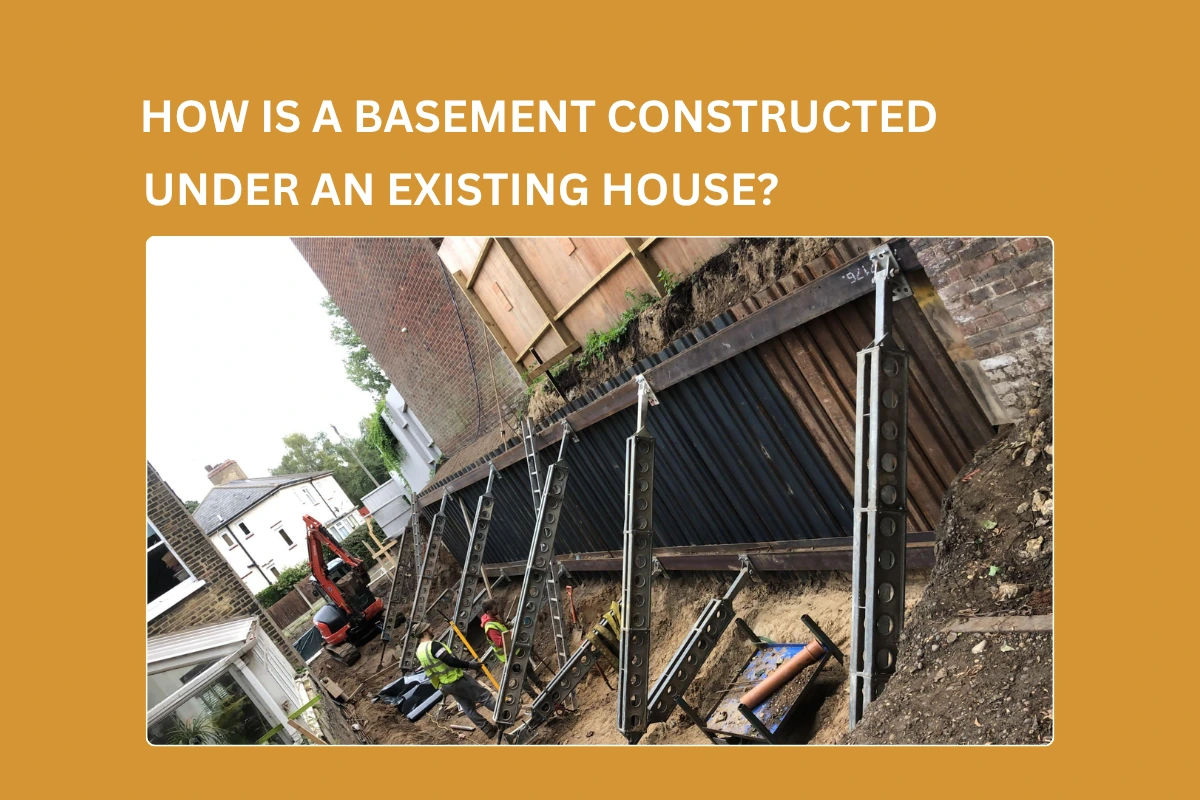
Adding a basement under an existing house is one of the most effective ways to dramatically increase living space, boost property value, and create luxury features like home cinemas, gyms, or extra bedrooms — all without extending outwards. In London, where land is at a premium, basement construction services have become extremely popular. However, constructing a basement under an existing property is a highly specialised and complex process that requires experienced basement specialists and underpinning specialists. At WJB Groundworks, we are recognised underpinning construction experts and basement contractors London trusts for safe, compliant, and high-quality results.
This detailed, user-friendly guide explains exactly how a basement is constructed under an existing house — from initial planning and party wall agreements to the final waterproofing and fit-out. We cover every stage of basement excavation, underpinning construction, basement structure reinforcement, and the critical safety measures that protect your home throughout the project.
Retrofitting a basement under an existing property can increase your home’s footprint by 50–100% or more. In high-value London postcodes, a well-built basement can add £500,000–£2 million+ to property value. Homeowners choose basement construction services for home offices, cinemas, swimming pools, wine cellars, granny annexes, or simply extra living space. Unlike loft conversions or rear extensions, a basement doesn’t affect your garden or require planning permission in many cases (subject to local rules).
Unlike new-build basements, retrofitting under an existing house involves supporting the entire building while excavating beneath it. The two main methods are underpinning construction (traditional mass concrete or mini-piling) and sometimes piled raft solutions. Only licensed and highly experienced basement specialists should undertake this work — the structural risks are significant if not done correctly.
Before any work begins, basement specialists conduct a full structural survey. A chartered structural engineer assesses existing foundations, soil conditions (London clay is common), water table levels, and neighbouring properties. They design the new basement structure and specify the underpinning construction method. This stage identifies risks and determines whether traditional underpinning, mini-piling, or a combination is safest.
Many London boroughs allow basement excavation under Permitted Development, but some (e.g., Kensington & Chelsea, Westminster) require full planning permission. A Party Wall Agreement is almost always mandatory when excavating near neighbours. Experienced basement contractors London handle all paperwork, surveys, and negotiations with neighbours to avoid costly legal disputes.
Before digging starts, underpinning specialists install temporary steel props and needles through the existing walls to fully support the house. This prevents any movement during basement excavation. Advanced monitoring systems (theodolites, tilt meters, crack monitors) are set up to track movement in real-time — even 1mm can trigger immediate action.
Underpinning construction is carried out in small, carefully sequenced sections (typically 1–1.5m “pins” or “hits”). Basement specialists excavate beneath one section of the existing foundation, pour mass concrete (or install mini-piles), and allow it to cure before moving to the next pin. This “hit and miss” sequence ensures the house remains fully supported at all times. Only licensed underpinning specialists with £10m+ insurance should perform this work.
Once the entire perimeter is underpinned and the new deeper foundations are in place, the main basement excavation begins. Soil is removed (often hundreds of tonnes) using mini-diggers, conveyor systems, or cranes. In tight London terraces, soil may be removed through the house or via a small front-area hatch. Dust and noise are carefully controlled to minimise disruption.
The new basement structure is built using reinforced concrete walls and slab. Waterproof concrete (often with additives) and external tanking membranes are applied. Basement specialists install cavity drain membranes, sump pumps, and backup systems for total waterproofing. Steel or concrete beams may be added for large open-plan spaces or swimming pools.
Professional basement waterproofing (tanking) is essential in London’s high water table areas. A combination of Type A (barrier), Type B (structurally integral), and Type C (cavity drain) systems provides BS 8102:2022 Grade 3 habitable protection. Reputable basement contractors London offer insured guarantees (10–30 years) on waterproofing.
Building regulations require natural light and emergency escape. Basement specialists create lightwells (front or rear), install structural glass pavements, and add ventilation systems (often MVHR) to prevent condensation. Fireproof staircases and protected escape routes are mandatory.
Underfloor heating, plumbing, electrics, and drainage are installed. The basement structure is then ready for your chosen fit-out contractor to create the luxury space you envisioned.
Real-time monitoring is non-negotiable. Underpinning specialists use automated total stations that trigger alarms if movement exceeds 1:500. Daily engineer inspections and weekly reports keep everyone informed. Insurance-backed guarantees and CDM compliance are standard with reputable basement construction services.
A typical single-storey basement under a Victorian terraced house takes 6–9 months. Double basements or swimming pools can take 12–18 months. Delays often arise from party wall disputes or unexpected ground conditions — which is why choosing experienced basement specialists is crucial.
Costs range from £2,500–£4,500 per m² (2025 prices), meaning a 50m² basement typically costs £150,000–£250,000 + VAT, including underpinning construction, waterproofing, and basic fit-out. Swimming pools, cinemas, or double basements push costs towards £400,000–£800,000+.
At WJB Groundworks, we are trusted underpinning specialists and basement contractors London with decades of experience in safe, high-quality basement construction services. We manage the entire process — from design and party wall agreements to underpinning construction and guaranteed waterproofing. Our in-house structural engineers, underpinning specialists, and basement specialists ensure your home is in the safest hands.
The process uses underpinning construction in sequenced sections to safely support the house while excavating beneath it. Basement specialists dig small “pins” under the existing foundations, pour new concrete deeper, then move to the next section until the entire perimeter is underpinned and ready for full basement excavation.
Temporary propping and real-time monitoring protect the structure throughout.
Only licensed underpinning specialists should carry out this high-risk work.
The new basement structure is then built with reinforced concrete and fully waterproofed.
The entire project typically takes 6–18 months depending on size and complexity.
Yes — when carried out by experienced underpinning specialists with proper temporary works, monitoring, and insurance. Movement is limited to less than 1:500 using automated systems and daily engineer checks.
Reputable basement construction services provide £10m+ insurance and structural guarantees.
Poorly executed underpinning can cause serious damage — always choose proven basement specialists.
Party wall surveyors independently monitor neighbouring properties.
Thousands of successful projects are completed safely in London every year.
Expect £2,500–£4,500 per m² in 2025. A typical 50m² basement costs £150,000–£250,000 + VAT including underpinning construction, waterproofing, lightwells, and basic finish.
Double basements or swimming pools can exceed £500,000–£1m+.
Costs are higher in central London due to access and party wall complexity.
Basement specialists provide detailed fixed-price contracts after survey.
Finance options and staged payments are available with trusted basement contractors London.
Many boroughs allow single-storey basements under Permitted Development, but several (Kensington & Chelsea, Westminster, Camden, Islington) now require full planning permission.
Lightwells over 150mm deep usually need permission.
Basement specialists handle all applications and pre-apps.
A Party Wall Agreement is nearly always required regardless of planning.
Listed buildings or conservation areas have stricter rules.
Traditional mass concrete underpinning is used for most Victorian/Edwardian houses and involves digging beneath existing foundations in sections.
Mini-piling or piled raft systems are used when ground conditions are poor or deeper excavation is needed.
Underpinning specialists choose the safest method after soil investigation.
Piling is often faster but more expensive.
Both achieve the same goal: safely supporting the house during basement construction services.
Most can, but feasibility depends on foundation depth, soil type, water table, and neighbouring properties. Basement specialists conduct a full survey to confirm viability.
Terraced and semi-detached houses are common candidates.
Some modern houses with shallow foundations may require alternative solutions.
Party wall constraints can limit depth in very close terraces.
A structural engineer’s report is essential before proceeding.
Underpinning construction itself takes 6–12 weeks depending on house size and method. The full basement excavation and build adds 4–12 months.
Double basements or swimming pools extend timelines significantly.
Experienced basement specialists work efficiently while never compromising safety.
Delays often arise from party wall awards or weather, not the underpinning process.
Accurate timelines are provided after the initial survey.
Yes — reputable basement contractors London provide 10–30 year insured guarantees on waterproofing systems (BS 8102 Grade 3).
Combination systems (tanking + cavity drain + sump pumps) are standard.
Guarantees are backed by specialist insurers, not just the contractor.
Annual maintenance is recommended to preserve the warranty.
Cheap or DIY waterproofing often fails — always use proven basement specialists.
Party Wall Surveyors legally protect neighbours via a Party Wall Agreement. Monitoring ensures no damage occurs.
Noise and dust are controlled under strict guidelines.
Experienced basement specialists minimise disruption with conveyor systems and screened sites.
Most neighbours experience only temporary inconvenience.
Good communication throughout prevents disputes.
Yes — most clients stay in their homes throughout. Temporary propping and careful sequencing keep the house fully habitable.
Noise and dust are managed with phased working and sealed zones.
Some choose to move out during the noisiest excavation phase.
Basement specialists provide detailed disruption schedules.
Underpinning construction is surprisingly quiet compared to excavation.
Constructing a basement under an existing house is a major but highly rewarding project when carried out by genuine basement specialists and underpinning specialists. At WJB Groundworks, we offer complete turnkey basement construction services — from feasibility and design through to waterproofing and handover.
Contact our expert team today at info@wjbgroundworks.com for a free consultation and feasibility assessment. Let us help you unlock the hidden potential beneath your home — safely, professionally, and with total peace of mind.
Consult with our specialists and book an on-site inspection at your convenience. Contact us at 01784740573, or email us at info@wjbgroundworks.com for a bespoke quote. Visit our portfolio and explore the projects we have conducted successfully.