
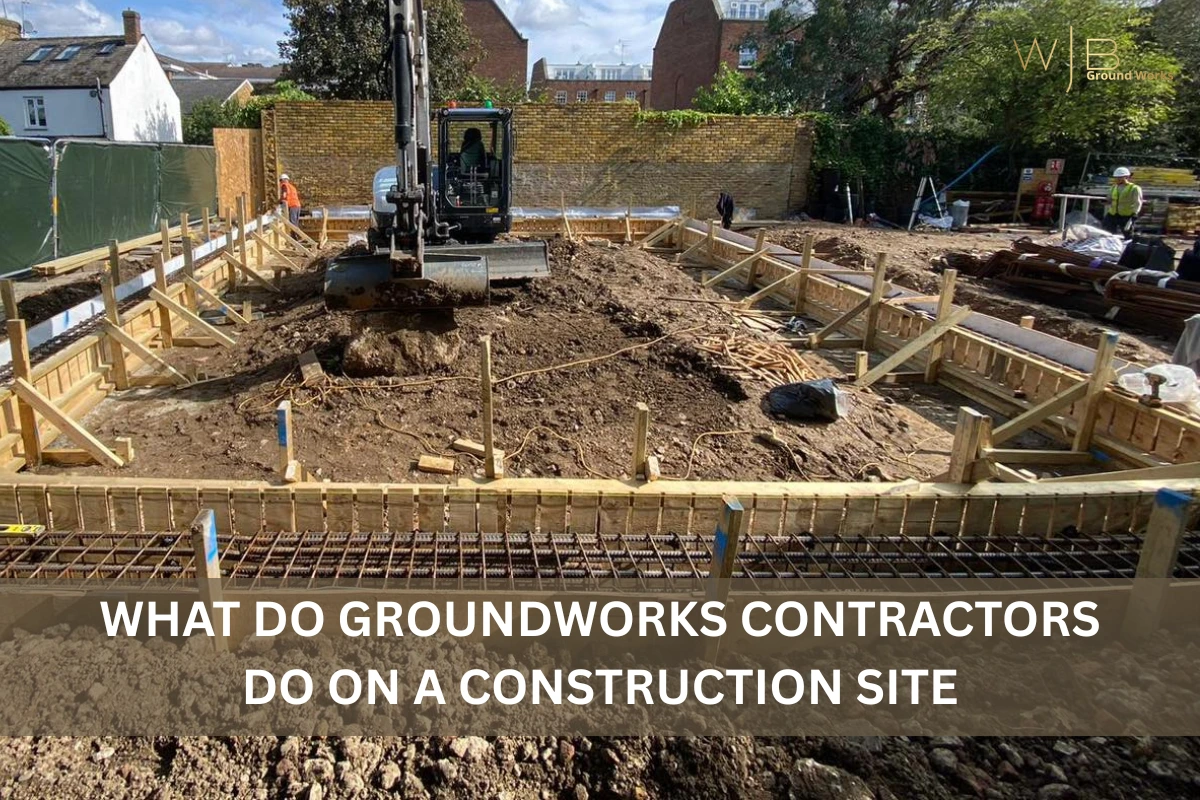
Before construction begins above ground, the fate of a construction project is decided underground. Groundwork contractors transform raw land into viable building plots through foundation laying and land preparation, ensuring structural integrity throughout a project's lifespan.
If you have ever asked what do groundworks contractors do on a construction site, the answer covers far more than simply digging holes. These professionals carry out the critical early-stage work that allows every other trade to follow safely and accurately. In this guide, we walk through their core functions, the challenges they face, and why choosing the right contractor matters.
If a building is a body, the groundwork contractor builds the skeleton and the nervous system. These skilled professionals arrive first and execute critical physical phases, transforming unpredictable land into engineered platforms capable of supporting massive structures.
Groundwork contractors are specialists in below-ground construction. They manage everything from initial site clearance and excavation through to foundation work, drainage installation, utility trenching, and ground stabilisation. Their work creates the stable, compliant base on which all other construction depends.
Groundwork contractors handle a wide range of interconnected tasks throughout the early and mid-stages of a construction project. Here are the seven core functions they perform.
Before any building work can begin, the site must be cleared. Groundwork contractors remove debris, vegetation, and obstacles, strip topsoil, manage demolition waste, and handle any hazardous materials safely. The aim is to create chemically stable, physically reinforced ground that is ready to accept engineering work.
Precision earth movement is a defining part of groundwork. Contractors employ GPS-guided equipment to execute cut and fill processes that reuse existing soil, balance site levels, and reduce material costs. Accurate excavation sets the correct depths and profiles for foundations, drainage, and services.
Groundwork contractors prepare and pour concrete for various foundation types, including strip foundations, raft foundations, and deep piling systems. Each option distributes the weight of the building strategically into the earth, ensuring long-term structural stability. The right foundation type depends on soil conditions, building load, and project specifications.
Drainage is a key area of groundwork. Contractors install foul water sewers and surface water drainage systems, and implement Sustainable Urban Drainage Systems (SUDS) featuring attenuation tanks and soakaways to prevent flooding and manage runoff responsibly. Correct drainage protects the structure and the surrounding land for the life of the building.
Groundwork contractors excavate and backfill trenches for electricity, gas, water, and fibre-optic lines, making sure all building entry points align with internal plumbing and electrical plans. Accurate utility installation at this stage avoids costly disruption and remedial work once the structure is complete.
Where ground conditions are poor, contractors employ soil compaction, geotextile membranes, and chemical hardening techniques using lime or cement to strengthen weak or unstable soil. These methods create a reliable load-bearing platform and protect the structure from settlement and movement over time.
In the final stages, groundwork contractors lay sub-bases for roads, pour concrete floor slabs, and install kerbs, block paving, and tarmac to complete the site's finished appearance. Their reinstatement work ensures the external areas are durable, functional, and visually appropriate for the completed development.
Groundwork is one of the most demanding disciplines in construction. Contractors regularly encounter complex, site-specific challenges that require experience, problem-solving, and the right equipment to resolve.
Surprise rock formations, high groundwater, weak soil, and clay-heavy ground that expands and contracts with moisture are common obstacles. Each requires advanced solutions, and cost and programme implications can be significant when problems are discovered mid-excavation.
Striking underground gas, water, or electricity lines is a serious risk. Poor mapping of existing services forces contractors to rely on detection tools and careful manual digging in sensitive areas, adding time and cost to the programme.
Heavy rain, snow, and extreme temperatures can halt groundwork operations. Water pooling weakens ground, prevents concrete pours, and stops plant from operating safely. Contractors must plan around weather windows and have contingency measures in place.
Urban sites present narrow access routes, limited storage, and restricted machinery movement. Overgrown or contaminated sites require extensive clearing before any structural groundwork can begin. Managing deliveries, plant movement, and material storage in tight spaces demands careful coordination.
Experienced groundworkers are nearing retirement age across the industry, and finding skilled replacements is increasingly difficult. Labour shortages drive up wages and can affect project timelines, particularly on larger or specialist schemes.
Groundwork projects can operate on very thin profit margins, sometimes as low as two to three percent. Delayed payments, material price increases, and unforeseen ground conditions can all disrupt cash flow and put financial pressure on contractors.
Groundwork carries inherent risks including trench collapses and machinery accidents. Strict health, safety, and environmental regulations require constant compliance throughout the project. Failing to meet these standards can result in serious incidents, enforcement action, and project delays.
Transitioning to digital tools, GPS-guided plant, and advanced underground scanning equipment involves high upfront costs. Many smaller contractors find it difficult to invest in new technology, which can limit productivity and competitiveness on modern projects.
Uneven surfaces, weak foundations, or poor drainage can lead to serious problems including cracks, dampness, and flooding. Quality groundworks provide the platform that supports everything built above.
Selecting the right groundworks contractor is one of the most important decisions you will make on a construction project. Here is what to consider.
Groundwork contractors handle everything that prepares ground for construction. Their foundational work, though hidden beneath the surface once the building is complete, provides the backbone of every sturdy structure. From site clearance and excavation through to drainage, utilities, and hard landscaping, their expertise determines whether a project starts on solid, reliable ground.
If you need experienced groundworks contractors for your next project, WJB Ground Works delivers expert site preparation, drainage, foundations, and civil engineering services across London and the South East.
The most common groundworks tasks include site clearance, excavation, foundation laying, drainage installation, and utility setup. These early-stage operations prepare the land and sub-base for all the structural work that follows.
On average, a groundworker in the UK is paid approximately £19.52 per hour. Annual salaries typically range from around £22,000 to £40,000 and above, depending on experience, specialism, and location.
Yes. Groundwork is physically demanding, involving outdoor work in various weather conditions, heavy machinery operation, and precise manual tasks. It requires both physical resilience and technical skill.
The cost reflects the combination of skilled labour, specialist plant and machinery, quality materials, and the complexity of creating a safe, stable, and compliant site. The investment is justified by the long-term protection it provides.
No. While both roles involve physical site work, groundworkers possess specialised skills in excavation, drainage, and foundation construction that go well beyond general labouring.
Basic skills can be developed over weeks to months on site. A full Level 2 professional apprenticeship typically takes 12 to 18 months, after which groundworkers can build specialist expertise over many years.
Yes. Ongoing construction and infrastructure projects consistently require skilled groundworkers. Demand remains strong across residential, commercial, and civil engineering sectors throughout the UK.
Consult with our specialists and book an on-site inspection at your convenience. Contact us at 01784740573, or email us at info@wjbgroundworks.com for a bespoke quote. Visit our portfolio and explore the projects we have conducted successfully.