
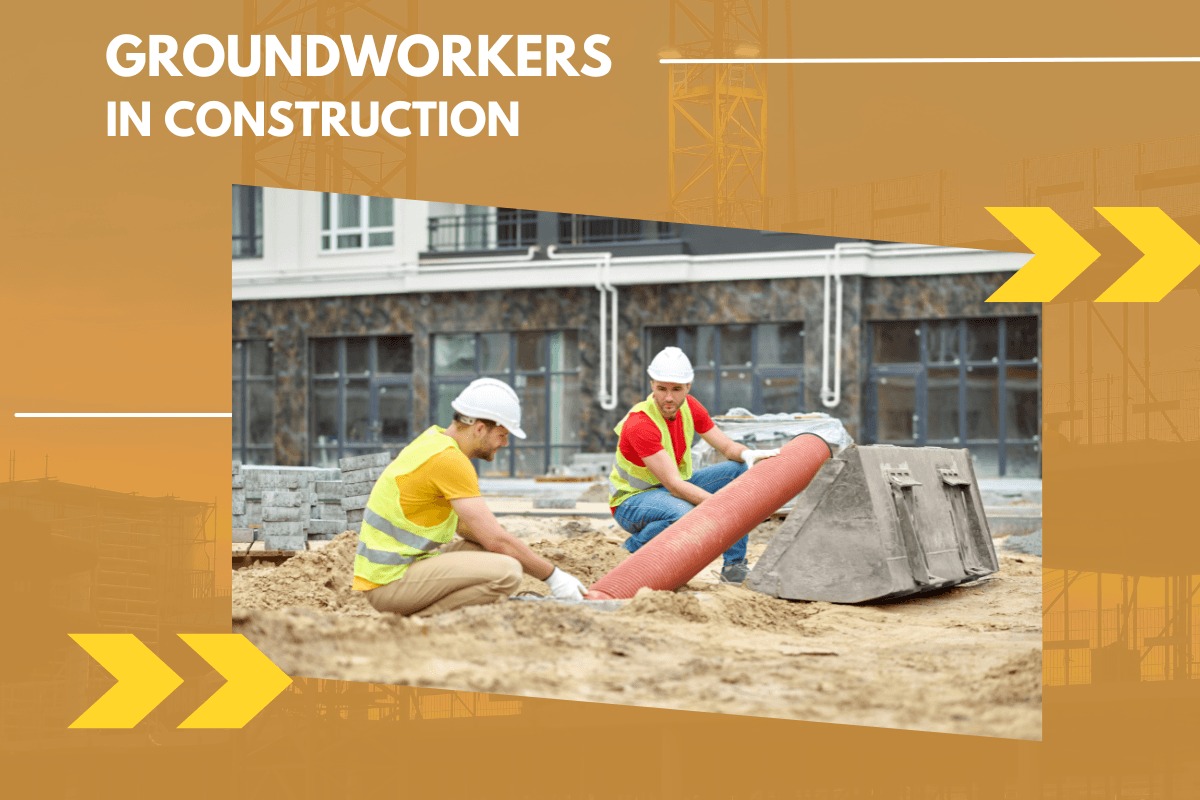
Groundwork is the stage that prepares land for safe, long-lasting construction. Before walls go up or concrete frames are installed, the site must be cleared, excavated, levelled, drained, and made ready to support the structure above. That essential early work is carried out by a groundworker.
If you have ever asked what is a groundworker in construction, the short answer is this: a groundworker is the skilled construction professional responsible for preparing the land, sub-base, foundations, drainage, and underground services that support a building or civil engineering project. Their work creates the stable platform every successful project depends on.
In this guide, we explain what groundworkers do, the skills and qualifications they need, their typical working hours, and the career opportunities available in the UK.
A groundworker is a specialist construction operative who handles the below-ground and foundation-stage tasks needed before and during structural work. They work on housing developments, commercial builds, roads, drainage schemes, basements, utilities, and wider civil engineering projects.
Their responsibilities often include clearing sites, excavating trenches, preparing sub-bases, installing drainage systems, laying concrete foundations, backfilling, compacting soil, and fitting underground ducts for gas, water, electric, and telecoms services. Groundworkers also read technical drawings, follow site levels, and work closely with engineers, surveyors, and project managers to keep work accurate and compliant.
Because they deal with the conditions beneath the finished structure, their work has a direct impact on safety, drainage performance, durability, and long-term stability. In simple terms, groundworkers create the base that allows everything else to be built properly.
A groundworker's daily tasks vary depending on the project, but the role usually covers a wide mix of site preparation, structural support work, and underground installation.
Groundworkers assess the site conditions before major work begins. This can include checking ground stability, understanding previous land use, identifying access constraints, and reviewing soil conditions to help determine the right preparation method.
One of the first major tasks is clearing the site and excavating soil to the required levels. Groundworkers dig trenches for foundations and services, remove unsuitable material, and prepare the ground so it can safely support future loads.
Once the ground has been prepared, they help build the foundation system. This can involve placing granular fill, setting reinforcement, checking levels, and pouring concrete for footings, slabs, or other structural base elements.
On some projects, groundworkers assist with underpinning work to strengthen or stabilise an existing structure. This is especially important when dealing with weak soil, structural movement, or extensions that add extra loads to an existing building.
Drainage is a core part of groundwork. Groundworkers install foul and surface water drainage systems, help manage runoff, and reduce the risk of flooding, standing water, and future ground failure.
After drainage and trenching, they may install underground ducting and service runs for gas, electricity, telecoms, and water. Accurate placement matters because these services must remain accessible, protected, and correctly routed.
On larger or more complex sites, groundworkers support basement and piling operations by setting out work zones, preparing excavations, and helping the wider site team maintain safe and organised progress.
Groundworkers may also install kerbs, edgings, paving, and compacted base layers for roads, footpaths, and access areas. This helps create durable external surfaces that can handle traffic and weather exposure.
In many projects, groundwork extends into external structural features such as retaining walls, driveways, pathways, boundary walls, and reinforced concrete elements that support the finished development.
Groundworkers are vital because even the best-designed building can fail if the site preparation is poor. Weak excavation, incorrect levels, poor drainage, or badly installed foundations can lead to settlement, cracking, water problems, and costly remedial work.
By preparing the ground properly and installing the right below-ground systems, groundworkers help projects stay safe, compliant, and structurally reliable from the outset. Their expertise supports every later trade on site.
Many groundworkers start through hands-on site experience, but the right training and certification can make progression much faster. Employers often look for a practical mix of recognised site qualifications and job-ready skills.
Formal education is not always essential, but GCSEs can support entry into construction courses or apprenticeships. A Level 2 NVQ in groundworks or a related area shows practical competence in tasks such as excavation, concreting, and drainage.
A CSCS card is commonly needed for access to UK construction sites. It shows the worker has the required baseline knowledge of health and safety practices for site work.
A groundworker apprenticeship is one of the strongest routes into the trade. It combines supervised site work with structured learning, helping new workers build real experience while gaining recognised qualifications.
Groundworkers who use machinery may need certifications such as CPCS or NPORS for equipment like excavators, dumpers, or rollers. These tickets improve job prospects and widen the type of groundwork tasks a worker can perform.
Construction safety knowledge is essential. Many workers complete the CITB Health, Safety and Environment test, and some also add first aid training to strengthen their site responsibilities and employability.
Good groundworkers also need dependable soft skills. Teamwork, communication, basic maths, problem-solving, instruction-following, and adaptability all matter on busy construction sites where precision and coordination are critical.
Groundworkers in the UK often work around 38 to 40 hours per week, although schedules can vary depending on the employer, project phase, weather, and site demands. Early starts are common, and some specialist or high-pressure jobs may involve longer shifts.
Typical working patterns often look like this:
| Groundworker Type | Typical Weekly Hours |
|---|---|
| Skilled operative | 45 to 50 hours |
| Standard full-time groundworker | 39 to 40 hours |
| Apprentice groundworker | 30+ hours |
| Night-shift specialist groundworker | 40 to 50 hours |
Demand for skilled groundworkers remains strong because construction projects depend on competent early-stage site preparation. Experienced workers may move into specialist drainage work, plant operation, hard landscaping, supervision, or broader site management roles as they build experience.
Groundwork can open the door to several long-term career routes across the construction industry. Common progression options include plant operator, roadworker, demolition operative, 360 driver, drainage specialist, hard landscaper, site supervisor, and project management roles.
If you want to build a career in groundwork, the best approach is to combine site experience with recognised training and safety certification.
A practical route usually looks like this:
So, what is a groundworker in construction? A groundworker is the specialist who prepares the site, supports the foundation stage, installs key below-ground systems, and helps make sure a project starts on stable, compliant ground. Their role is essential to the strength, safety, and longevity of any structure.
As construction demand continues across the UK, skilled groundworkers remain valuable across residential, commercial, and civil engineering projects. Whether you are considering groundwork as a career or looking for an experienced contractor to handle the early stages of a build, understanding this role helps you see just how important solid groundwork really is. If you need expert support on site preparation, drainage, foundations, or civil engineering services, WJB Ground Works is here to help.
Yes. Groundwork is physically demanding and often involves outdoor work, heavy materials, machinery, and strict attention to safety and accuracy.
Pay varies by experience, region, and specialism, but skilled groundworkers can often earn competitive rates in the UK construction market.
No. A groundworker is a site-based construction specialist, while a civil engineer usually focuses on design, planning, and engineering oversight. The two roles often work closely together.
Yes. Groundworkers remain in demand because nearly every construction and infrastructure project needs safe excavation, drainage, and foundation preparation at an early stage.
That depends on your route in. Some people start learning basic tasks within weeks on site, while becoming fully skilled usually takes longer through experience, training, and qualifications.
You can start with practical site experience, but recognised qualifications, safety cards, and plant tickets usually improve job opportunities and progression.
Small projects may take a few days or weeks, while larger or more complex schemes can take much longer depending on excavation, drainage, foundations, and access conditions.
Daily rates vary depending on location, skill level, plant tickets, and project requirements. Costs are usually higher for experienced specialists or complex groundwork packages.
Consult with our specialists and book an on-site inspection at your convenience. Contact us at 01784740573, or email us at info@wjbgroundworks.com for a bespoke quote. Visit our portfolio and explore the projects we have conducted successfully.