
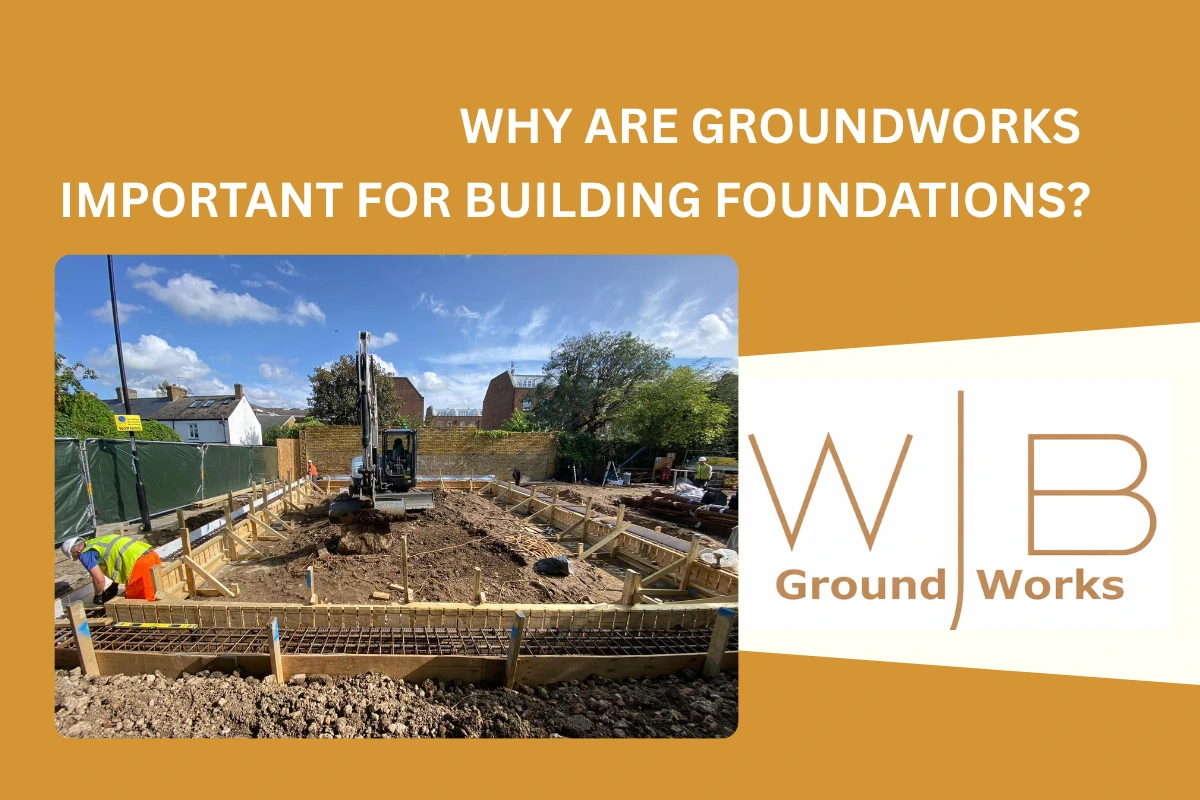
When planning any construction project, whether it's your dream home, a commercial building, or a simple extension, there's one element that determines whether your structure will stand strong for decades or develop serious problems within years. That element is groundworks. While many people get excited about design features, finishes, and layouts, experienced builders know that everything depends on what happens beneath the surface before the first brick is laid.
At WJB Groundworks, we've spent years perfecting the art and science of ground works construction. We've seen firsthand how proper residential ground works make the difference between buildings that last generations and those that require costly repairs within a few years. This comprehensive guide explains exactly why groundworks matter so much and what you need to know when planning any building project.
Before we dive into why groundworks are so crucial, let's clarify what we actually mean by this term. Ground works construction encompasses all the preparatory work that happens on a building site before the actual structure goes up. This isn't just about digging a hole in the ground – it's a sophisticated process that requires expertise, precision, and thorough understanding of soil mechanics, drainage, and structural engineering.
A professional ground works company handles multiple critical tasks during this phase. These include site clearance to remove vegetation and existing structures, detailed excavation to the correct depths, soil stabilisation to ensure adequate support, comprehensive drainage installation to manage water, foundation construction that meets engineering specifications, and utility installation for all essential services. Each of these elements must work together seamlessly to create a stable platform for your building.
Think of groundworks as the invisible foundation of your entire project. Just as a tree needs strong roots to weather storms and support its branches, your building needs properly executed ground works construction to remain stable, dry, and structurally sound throughout its lifetime.
The most fundamental purpose of residential ground works is creating a stable base capable of supporting the enormous weight of your building. Consider that a typical two-storey house weighs between 80 to 160 tonnes – that's equivalent to about 50 to 100 average cars sitting on your foundation. Without proper ground preparation by experienced groundworks specialists, this weight causes the soil to compress unevenly, leading to settlement, cracks, and potentially catastrophic structural failure.
Proper site preparation involves several crucial steps that many inexperienced contractors overlook. First, the soil must be thoroughly tested to determine its bearing capacity – essentially, how much weight it can support per square metre. Different soil types have vastly different capabilities. Clay soils, for instance, can be problematic because they shrink when dry and swell when wet, causing seasonal movement. Sandy soils might seem stable but can be prone to settlement if not properly compacted.
A skilled foundations contractor doesn't just accept the soil as they find it. They implement ground improvement techniques where necessary, which might include removing unsuitable material and replacing it with engineered fill, compacting the existing soil to increase its density and bearing capacity, or installing deep foundations that bypass poor soil layers entirely to reach stable ground below. This scientific approach to ground preparation distinguishes professional work from amateur attempts that often lead to problems.
One of the most compelling reasons to invest in quality ground works construction is prevention. The vast majority of serious structural problems that buildings develop years or even decades after construction can be traced back to inadequate groundworks. These aren't minor inconveniences – they're major defects that cost tens of thousands of pounds to repair and cause enormous stress for property owners.
Common problems that stem from poor groundworks include differential settlement, where different parts of the building sink at different rates, causing cracks that zigzag through walls and ceilings. You might also encounter subsidence, where the entire building gradually sinks into the ground, leading to doors and windows that won't close properly and serious structural instability. Water ingress becomes a persistent issue when drainage isn't properly installed, resulting in damp problems, mould growth, and deterioration of building materials. Foundation failure represents the worst-case scenario, where the foundation itself cracks or fails, requiring extensive and expensive underpinning work.
What makes these problems particularly frustrating is that they're entirely preventable. When you hire experienced groundworks specialists who follow proper procedures and building regulations, these issues simply don't occur. The investment in quality groundworks pays for itself many times over by avoiding these devastating repair costs.
If there's one enemy that causes more problems for buildings than any other, it's water. Moisture causes dampness, promotes mould growth, rots timber, corrodes metal, and gradually weakens concrete and masonry. In the UK, where rainfall averages around 1,100mm annually, managing water effectively isn't optional – it's absolutely essential for any building's longevity.
Professional residential ground works include comprehensive drainage solutions designed to keep water away from your foundations and structure. This involves multiple interconnected systems working together. Surface water drainage collects rainwater from roofs, paving, and driveways, directing it away from the building through properly graded surfaces and drainage pipes. Soakaways or connection to storm sewers ensure this water disperses safely without waterlogging the surrounding ground.
Below ground, foul drainage handles wastewater from kitchens, bathrooms, and appliances, connecting to main sewers or septic systems with proper falls to ensure flow. Land drains might be installed around foundations if groundwater levels are high, preventing water from pooling against basement walls or under floor slabs. Waterproofing membranes provide a final barrier, protecting foundations and ground floors from any moisture that does penetrate the surrounding soil.
A reputable ground works company designs these systems holistically, ensuring they work together effectively and comply with current building regulations. They consider factors like soil permeability, local water table levels, nearby watercourses, and connection points to existing drainage infrastructure. This comprehensive approach prevents the drainage problems that plague so many properties where corners were cut during construction.
Modern buildings rely on numerous utility services that must be installed underground before construction proceeds. These include mains water supply bringing fresh water to your property, gas lines if you're connecting to mains gas for heating and cooking, electrical supply cables providing power to the building, telecommunications infrastructure for phone and broadband services, and sewerage connections removing wastewater safely. Installing these services requires careful coordination, technical knowledge, and strict adherence to safety regulations.
Professional ground works construction ensures all utilities are positioned correctly according to approved plans, installed at proper depths with appropriate protection against damage, laid with correct gradients where necessary such as drainage pipes, properly marked and recorded for future reference, and tested thoroughly before being covered. This meticulous approach prevents the chaos that occurs when utilities are installed incorrectly. Nobody wants to discover that drainage pipes don't have adequate fall and won't drain properly, or that water mains are too shallow and vulnerable to frost damage.
Experienced groundworks specialists coordinate with utility companies and follow all relevant regulations. They use modern detection equipment to locate existing services, preventing accidental damage during excavation. They also plan utility routes that make future maintenance and repairs as straightforward as possible, thinking long-term rather than just focusing on immediate construction needs.
In the UK, all construction work must comply with Building Regulations, which set minimum standards for design, construction, and alterations to buildings. For groundworks and foundations, these regulations cover numerous critical aspects. The structural integrity requirements ensure foundations can safely support the building's weight with appropriate factors of safety. Drainage regulations specify how water must be managed, including separation of foul and surface water systems.
Thermal performance standards now require insulation below ground floors to improve energy efficiency. Radon protection is mandatory in affected areas to prevent this radioactive gas from accumulating in buildings. Accessibility provisions ensure proper ground levels and access routes, and contamination management requires assessment and remediation of contaminated sites.
A professional foundations contractor navigates these regulations expertly, ensuring your project achieves compliance at every stage. They arrange necessary inspections by Building Control officers, maintain proper documentation and certification, specify materials that meet required standards, and follow approved construction methods and techniques. This compliance isn't just about ticking boxes – it protects your investment by ensuring your building is safe, durable, and legally constructed. When you eventually sell your property, you'll need to demonstrate that all work was properly approved and certified.
Not all foundations are created equal, and one of the key decisions during ground works construction is selecting the appropriate foundation type for your specific project. This decision depends on numerous factors including soil conditions, building weight and design, ground water levels, proximity to trees and existing structures, local geology, and budget considerations. Let's explore the main foundation types and when each is most suitable.
Strip foundations are the most common type for residential ground works in the UK. They consist of a continuous strip of concrete that supports load-bearing walls. The strip is typically 600mm to 900mm wide and extends down to firm ground, usually at least 900mm deep but deeper where necessary.
Strip foundations work well when the ground has good bearing capacity, the building load is relatively modest and evenly distributed, access allows for traditional excavation methods, and ground water isn't a significant issue. They're cost-effective, proven over centuries of use, and relatively straightforward to construct with experienced groundworks specialists.
Trench fill foundations are a variation where narrow trenches are dug to the required depth and then filled almost completely with concrete, leaving just enough space above ground for blockwork to start. This approach reduces the amount of brickwork or blockwork below ground level, speeds up construction compared to traditional strip foundations, and requires less manual work in the trenches.
A professional ground works company might recommend trench fill when labour costs are high relative to concrete costs, ground conditions are good but the water table is high, or speed of construction is a priority. The main trade-off is higher material cost due to the large volume of concrete used.
Raft foundations consist of a reinforced concrete slab that extends across the entire footprint of the building. The load is spread over a much larger area, reducing pressure on the ground. This makes raft foundations ideal when soil has low bearing capacity, ground conditions vary across the site, there's a risk of differential settlement, or the building will have heavy loads.
Modern residential ground works often use insulated raft foundations, which incorporate rigid insulation into the slab, providing excellent thermal performance for ground floors. While more expensive than strip foundations, rafts provide superior performance in challenging conditions and can eliminate the need for a separate suspended floor.
When ground conditions are particularly poor near the surface, piled foundations transfer the building load down to stable ground at greater depth. Piles might be driven into the ground or cast in drilled holes, extending down to bedrock or denser soil layers. A foundations contractor recommends piling when surface soil cannot support the building, very heavy structures are being built, unstable ground conditions exist, or the building is near water or on sloping sites.
Piling is more expensive than other foundation types, but it's sometimes the only viable option. Modern piling techniques have become more accessible for residential projects, making this solution available even for smaller developments where ground conditions demand it.
Understanding what happens during professional ground works construction helps you appreciate the complexity involved and why proper expertise matters so much. Let's walk through a typical project from start to finish.
Before any excavation begins, thorough site investigation takes place. This critical phase includes topographical surveys to map existing ground levels and features, geotechnical investigations involving trial pits or boreholes to assess soil conditions, utility surveys using detection equipment to locate existing services, environmental assessments checking for contamination or protected species, and archaeological surveys if the site has historical significance.
Experienced groundworks specialists analyse this information to design appropriate foundations and drainage systems, identify potential challenges before they cause delays, and plan the most efficient construction sequence. Skipping or skimping on this stage is false economy – the small upfront cost of thorough investigation prevents expensive surprises during construction.
With investigations complete and plans approved, the ground works company begins physical work on site. Vegetation gets stripped away, including trees, shrubs, and their root systems that could cause future ground movement. Any existing structures or hardstanding are demolished and removed. Topsoil is stripped away and usually stored separately for later use in landscaping, as it's too organic and compressible to support foundations.
The cleared site is then carefully set out using surveying equipment to mark precisely where foundations, drainage, and utilities will be installed. This ensures the building sits correctly on the plot with proper boundary distances and orientation. Temporary services like site electricity, water supply, and welfare facilities are also established during this phase.
Excavation is where the ground works construction becomes really visible. Using appropriate machinery – from mini diggers on tight sites to large excavators on open developments – the team digs to the required depths. This isn't random digging but carefully controlled work following approved plans and responding to actual ground conditions as they're exposed.
As excavation proceeds, groundworks specialists continuously assess the ground conditions, checking that they match expectations from site investigations. If unexpected conditions emerge – perhaps softer ground than anticipated, unexpected groundwater, or buried obstructions – experienced contractors adapt their approach accordingly. The excavated ground must reach firm, load-bearing strata, not just an arbitrary depth.
Foundation trenches are typically over-excavated slightly and then backfilled with a lean concrete mix or compacted hardcore to create a clean, level working surface. This prevents foundation concrete from mixing with soil and ensures consistent foundation depth. Where ground needs improvement, this is done at excavation stage through methods like soil stabilisation, replacement of unsuitable material, or installation of drainage to lower groundwater levels.
With foundations excavated, drainage systems get installed. This must happen before foundations are cast, as drainage pipes often run beneath or alongside foundation structures. The process involves laying foul drainage to building control specifications with proper gradients, installing surface water drainage including any soakaways or attenuation systems, fitting inspection chambers at junctions and changes of direction, and installing land drains around foundations if required.
A professional ground works company tests all drainage thoroughly before covering it. Pipework gets filled with water to check for leaks, gradients are verified using laser levels, and cameras might be used to inspect the interior of pipes. Only when everything performs correctly does the drainage get backfilled and protected. This attention to detail prevents the nightmare scenario of discovering drainage faults after the building is complete.
Now the actual foundations get built. For concrete foundations, this involves installing reinforcement if specified, with steel bars positioned according to engineering drawings. Concrete is then poured to the correct depth and specification, usually C25/30 or similar strength. The concrete must be properly compacted to eliminate air pockets and finished level with a smooth surface.
Experienced foundations contractors understand that concrete quality matters enormously. They ensure the mix is correct, that it's placed within the specified time after mixing, that it's properly compacted using vibrating equipment, and that it's cured properly with protection from rain, frost, and rapid drying. These details determine whether your foundations perform for decades or develop problems.
Foundation walls then get constructed on top of the concrete base, whether that's concrete blockwork, engineering bricks, or poured concrete walls. Damp-proof courses get installed at the correct level, and insulation goes in according to thermal performance requirements. All work is inspected by Building Control at appropriate stages to ensure compliance.
Once foundations are complete, attention turns to the floor area inside. A layer of hardcore – typically crushed stone or recycled concrete – gets spread across the site and compacted to provide a firm base. This hardcore layer is usually 100mm to 150mm thick and must be thoroughly compacted using vibrating equipment.
Sand blinding goes over the hardcore to create a smooth surface and prevent sharp edges from puncturing the damp-proof membrane. Speaking of which, the DPM (damp-proof membrane) is then carefully laid across the entire floor area, with overlaps sealed and edges turned up at walls to connect with the damp-proof course. This forms a complete moisture barrier protecting your ground floor from dampness rising from the ground.
Insulation boards follow, providing thermal protection that makes your ground floor warm and comfortable while reducing heating costs. Finally, a concrete slab gets poured over everything, typically 100mm thick with mesh reinforcement. This creates your ground floor, ready for screed and floor finishes later in the construction programme.
Throughout the groundworks process, utilities get installed and connected. Water mains get brought to the site with appropriate valves and protection. Gas supplies are installed to required standards with proper venting and safety devices. Electrical supplies come in via underground cables in approved ducts, usually connecting to a temporary supply point initially and the permanent consumer unit later.
Telecommunications get installed through ducts that allow cables to be pulled through later, avoiding need for disruptive trenching after construction completes. All utilities get properly marked and their locations recorded so future work doesn't accidentally damage them. A professional ground works company coordinates with all utility providers, obtaining necessary approvals and arranging inspections at appropriate stages.
With all underground work complete and inspected, trenches get backfilled. This doesn't mean just pushing soil back in – proper backfilling involves placing material in layers, typically 300mm thick, that get compacted progressively. This prevents future settlement that causes ground levels to drop or paths to sink.
The ground works company will restore ground levels to match surrounding areas, create proper falls away from the building to shed surface water, reinstate any disturbed areas, and prepare the site for handover to the main building contractor. All documentation gets compiled including test certificates for drainage, building control approvals, utility connection confirmations, and as-built drawings showing exactly where everything is installed.
Every site presents unique challenges, and it's how these get addressed that separates experienced groundworks specialists from less competent operators. Let's examine some common issues and professional solutions.
Large parts of the UK have clay soils that shrink when they dry out and swell when they get wet. This seasonal movement can crack foundations if not properly addressed. Trees make this worse by drawing moisture from soil, creating zones of movement around their roots.
Professional residential ground works handle clay by designing foundations that extend below the zone of seasonal movement, typically at least 900mm to 1200mm deep. Where trees are present, foundation depths increase based on the tree species and distance from the building. In extreme cases, a foundations contractor might recommend deeper piled foundations that bypass the clay layer entirely, or special flexible joints that accommodate movement.
Sites with high water tables present multiple challenges. Excavations fill with water, making work difficult and unsafe. Foundations remain constantly wet unless properly waterproofed. Basements become problematic without sophisticated tanking systems.
Experienced ground works construction teams handle high water tables through several techniques. They temporarily dewater the site during construction using well-pointing or sump pumps. They design permanent drainage systems that lower groundwater levels around foundations. They specify waterproof concrete mixes and apply external waterproofing to foundation walls. They install cavity drainage membranes that channel any water that does penetrate to collection points.
Many urban sites have contamination from previous industrial use, old fuel tanks, asbestos in demolition rubble, or made-up ground containing harmful materials. This contamination must be identified and dealt with before construction proceeds.
A reputable ground works company conducts environmental surveys to identify contamination, then implements appropriate remediation strategies. This might involve excavating and disposing of contaminated material, treating soil in-situ to neutralise contaminants, or capping contaminated ground with clean material and gas-proof membranes. They ensure all work complies with environmental regulations and obtain necessary certificates.
Urban sites often have limited access through narrow streets or gates, restricted working space between existing buildings, concerns about noise affecting neighbours, and restrictions on working hours. These constraints make ground works construction more challenging but not impossible.
Professional groundworks specialists use appropriate equipment scaled to site conditions – mini diggers instead of large excavators, hand digging where machinery cannot access, careful planning of material deliveries to minimise disruption, and thoughtful sequencing of work to maximise efficiency despite constraints. Their experience with difficult sites means they can deliver quality results even in challenging locations.
When reviewing quotations, the temptation to choose the cheapest option can be strong, especially when ground works construction represents a substantial portion of your budget. However, this is absolutely the wrong place to economise, and here's why.
Fixing foundation problems after construction is eye-wateringly expensive. You're not just paying for the repair work – you're paying to expose failed foundations, support the building while repairs happen, often accommodate residents elsewhere during works, and restore everything after repairs complete.
What might cost £15,000 to do properly during initial construction could easily cost £100,000 or more to remedy later. Plus you face enormous disruption, stress, and possibly even need to vacate your property for weeks or months. The modest savings from cheap groundworks are completely wiped out by these catastrophic costs.
Properties with structural problems become incredibly difficult to sell. Surveyors flag foundation issues, which frighten off buyers and alert mortgage lenders who often refuse to lend. Even if you find a cash buyer willing to take the risk, they'll demand substantial price reductions.
Your property's value plummets, potentially costing you tens of thousands of pounds when you sell. Good residential ground works protect and enhance your investment. Poor groundworks destroy value and create assets that become liabilities.
Beyond financial considerations, there are real safety implications. Structural failure can be catastrophic, making buildings unsafe to occupy. Even less dramatic problems like chronic dampness affect health through mould growth and poor air quality.
No amount of saved money justifies risking your family's safety or creating unhealthy living conditions. Professional ground works construction from experienced groundworks specialists ensures your building is safe, stable, and healthy for decades.
Given how critical groundworks are to your building's success, choosing the right contractor deserves careful consideration. Here's what to look for.
Look for a ground works company with substantial experience in projects similar to yours. Residential ground works differ from commercial or industrial projects, so find specialists in your building type. Ask to see their portfolio of completed projects, speak with previous clients if possible, and check online reviews and testimonials.
Experienced foundations contractors will confidently discuss challenges they've encountered and how they overcame them. They'll understand local ground conditions and building regulations. They'll have encountered most situations before and know proven solutions.
Professional groundworks specialists hold relevant qualifications and certifications. Check they have appropriate insurance including public liability and employers' liability, membership of professional bodies or trade associations, certifications for specialist work like contaminated land or confined spaces, and qualified staff including plant operators and supervisors.
Don't be shy about asking for proof of these credentials. Reputable contractors expect such questions and readily provide documentation. Those who can't or won't produce evidence should raise red flags.
Quality ground works construction contractors provide comprehensive quotations that detail exactly what's included. Beware of vague quotes that lack detail – they often hide unpleasant surprises.
A good quotation breaks down site investigation and surveys, excavation quantities and depths, drainage systems and specifications, foundation type and concrete specifications, utility installations, backfilling and reinstatement, and excludes any items not included. It also explains assumptions made and what could trigger additional costs.
The cheapest quote rarely offers best value. If one contractor is significantly cheaper than others, question why. Are they cutting corners, using inferior materials, lacking proper insurance, or simply underestimating the work required?
How a foundations contractor behaves before you hire them usually indicates how they'll perform during your project. Do they respond promptly to enquiries, explain technical matters clearly without jargon, visit the site before quoting, ask intelligent questions about your project, and provide references without prompting? These are hallmarks of professional operators.
Avoid contractors who pressure you for quick decisions, are evasive about credentials or insurance, are significantly cheaper than all competitors, won't provide a detailed written quotation, or suggest bypassing building control. These warning signs often precede poor work and problems.
All ground works construction must comply with UK Building Regulations. Understanding these requirements helps you ensure your contractor works to appropriate standards.
This section covers foundations and structural integrity. It requires that buildings are constructed so they won't collapse or deform dangerously, foundations safely transfer loads to the ground, and proper allowances are made for ground movement. Your foundations contractor must design foundations with adequate safety factors, use appropriate materials and construction methods, and provide calculations from a structural engineer where required.
This section details drainage requirements. It specifies standards for foul drainage systems, surface water disposal, solid waste storage, and cesspools and septic tanks. Professional residential ground works include properly designed drainage to these standards, with appropriate pipe gradients, inspection chambers, and connections.
Modern buildings must meet strict thermal performance standards. For groundworks, this means installing adequate insulation below ground floors, ensuring continuity of insulation at junctions, and minimising thermal bridging. Your ground works company must understand these requirements and incorporate appropriate insulation into foundation and floor designs.
This covers site investigation, treatment of contaminated land, and resistance to moisture and gases. It requires assessment for radon protection in affected areas, precautions against methane from landfill sites, and damp-proofing of walls and floors. Experienced groundworks specialists ensure all these protections are built into your groundworks.
Investing in professional ground works construction delivers benefits throughout your building's lifetime.
Properly designed and executed foundations provide rock-solid stability for decades. Your building won't develop cracks, settlement, or structural movement. Doors and windows continue operating smoothly. Floors remain level. The building simply works as intended, year after year.
Comprehensive drainage and waterproofing systems keep your property dry and healthy. No rising damp creeping up walls. No penetrating damp soaking through floors. No mould growth causing health problems. Just a comfortable, healthy environment for occupants.
Modern residential ground works include effective insulation that dramatically improves thermal performance. Your ground floor stays warm in winter without excessive heating. Energy bills reduce significantly. Comfort levels improve throughout the building. These benefits accumulate year after year, with energy savings that can total thousands of pounds over a building's lifetime.
Quality groundworks by experienced groundworks specialists require minimal maintenance. Drainage systems flow freely without blockages. Foundations remain stable without requiring monitoring or repairs. Your building just works without demanding constant attention or expense.
When you eventually sell your property, solid foundations and proper groundworks are major selling points. Surveyors find no structural concerns. Buyers have confidence in the building's quality. The property commands better prices and sells more quickly. Your investment in quality ground works construction protects and enhances property value.
At WJB Groundworks, we've built our reputation on delivering exceptional ground works construction across the region. Our team combines decades of experience with modern techniques and equipment to provide groundwork services that set the standard for quality and reliability.
We understand that every project is unique, with its own challenges and requirements. That's why we take time to thoroughly investigate each site, design appropriate solutions, and execute work to the highest standards. Whether you're building a new home, extending your property, or undertaking commercial development, we provide the solid foundation your project deserves.
As experienced groundworks specialists and a trusted foundations contractor, we handle everything from initial site investigation through to final building control approval. Our comprehensive service includes detailed ground surveys and soil testing, complete excavation and ground preparation, professional drainage design and installation, foundation construction to engineering specifications, utility installation and connection, and full building control coordination and certification.
What sets us apart as a leading ground works company is our commitment to doing things properly the first time. We don't cut corners or compromise on quality. Every member of our team understands that the groundworks we install today must perform flawlessly for decades to come. That's a responsibility we take seriously, and it shows in the exceptional results we deliver.
Our clients choose us because they want residential ground works they can trust completely. They appreciate our transparent communication, detailed quotations, and professional approach to every aspect of the project. Most importantly, they value the peace of mind that comes from knowing their building foundation is absolutely solid.
Groundworks encompass all preparatory work that happens before the main building construction begins. This includes site clearance and preparation, excavation to required depths, soil assessment and stabilisation, comprehensive drainage installation for both foul and surface water, foundation construction, utility installation including water, gas, electricity and telecommunications, and ground floor preparation. Essentially, ground works construction creates the stable, safe platform on which your entire building sits.
Groundworks are critical because they determine whether your building remains stable, dry, and structurally sound throughout its lifetime. Proper residential ground works prevent structural issues like settlement and cracking, manage water effectively to avoid damp problems, provide a stable base capable of supporting the building's weight, ensure compliance with building regulations and safety standards, and protect your investment by preventing costly future repairs. Without quality groundworks, even the most beautifully designed building will eventually develop serious problems.
The duration of ground works construction varies considerably depending on project size and complexity, soil and ground conditions, weather conditions during construction, access constraints and site restrictions, and the scope of drainage and utilities required. A typical residential project might take two to four weeks for groundworks, though larger or more complex projects can take significantly longer. Experienced groundworks specialists provide realistic timescales based on your specific project and site conditions.
Absolutely yes. Every structure, regardless of size, requires proper foundations and groundworks. Extensions must tie into existing foundations correctly, meet current building regulations including thermal performance standards, include proper drainage that connects to existing systems, and be designed to avoid affecting the original building negatively. Attempting to build an extension without professional residential ground works almost always leads to problems, often expensive ones. A qualified foundations contractor ensures your extension is built on solid foundations that match or exceed the quality of your original building.
Unfortunately, yes – inadequate ground works construction can cause severe damage to buildings. Common problems include structural cracks appearing in walls, ceilings, and floors, doors and windows that stick or won't close properly, uneven floors that slope or feel bouncy, chronic damp and mould problems, drainage that doesn't work correctly, and in severe cases, actual structural failure requiring emergency repairs. These problems often don't appear immediately but develop over months or years as the inadequate groundworks fail to perform. The cost to fix these issues typically dwarfs what proper groundworks would have cost initially.
Strip foundations consist of continuous concrete strips running under load-bearing walls, typically used where ground conditions are good and loads are modest. Raft foundations are reinforced concrete slabs that extend across the entire building footprint, spreading loads over a much larger area. A ground works company recommends raft foundations when soil has lower bearing capacity, ground conditions vary across the site, or there's risk of differential settlement. Both foundation types can perform excellently when properly designed and constructed for appropriate conditions.
Look for several key indicators when choosing groundworks specialists. They should hold appropriate insurance including substantial public and employers' liability cover, have membership of professional trade bodies or associations, possess certifications for specialist works if required, employ qualified staff including CPCS-certified plant operators, provide detailed references from previous clients, and offer comprehensive written quotations that detail all work included. Don't hesitate to ask for proof of these credentials – professional contractors expect such questions and readily provide documentation.
Unexpected conditions do sometimes emerge during ground works construction – perhaps softer ground than soil surveys indicated, unexpected groundwater, buried obstructions, or contamination. Experienced foundations contractors handle these situations professionally by stopping work to assess the situation, consulting with structural engineers if necessary, proposing appropriate solutions to address the problem, and providing clear explanations and quotations for additional work required. This is why working with reputable groundworks specialists is so important – they have the expertise to adapt plans and overcome challenges while maintaining quality and compliance.
Yes, absolutely. All ground works construction must comply with UK Building Regulations, and Building Control must inspect work at key stages. These inspections typically include excavations before concrete is poured to verify depth and ground conditions, drainage installation before being covered to ensure proper installation and testing, foundation construction to check reinforcement and concrete quality, and damp-proofing and insulation before covering. A professional ground works company coordinates all necessary inspections and obtains certification confirming compliance. This documentation is essential for future property sales and provides legal protection.
Groundworks costs vary enormously based on project specifics, but as a rough guide, expect ground works construction to represent 10% to 20% of total building costs for straightforward projects. Challenging sites with poor ground conditions, high water tables, or contamination can push this higher. For a typical new house build costing £200,000, groundworks might range from £20,000 to £40,000. Extensions typically require £5,000 to £15,000 for groundworks depending on size and complexity. Always obtain detailed quotations from experienced groundworks specialists rather than relying on rough estimates, as every site has unique characteristics affecting cost.
Every successful building project starts with one crucial decision – choosing to invest in quality ground works construction that will support your structure for generations. Whether you're planning a new home, considering an extension, or embarking on commercial development, the groundworks phase deserves your full attention and investment.
At WJB Groundworks, we're ready to provide the professional residential ground works your project needs. Our team of experienced groundworks specialists brings technical expertise, proven methods, and unwavering commitment to quality to every project we undertake. We understand that you're not just building a structure – you're creating a valuable asset that must perform flawlessly for decades.
Don't leave something this critical to chance or compromise with cut-price alternatives that cut corners. Your building deserves foundations that are absolutely solid, and that's exactly what we deliver. As an established foundations contractor serving the region, we have the experience, equipment, and expertise to handle projects of any size or complexity.
Whether you're dealing with challenging ground conditions, need expert advice on foundation options, or simply want the reassurance that comes from working with proven professionals, we're here to help. Our comprehensive approach covers everything from initial site investigation through to final certification, ensuring your ground works construction meets the highest standards throughout.
Ready to discuss your groundworks requirements and get your project started on solid foundations? Contact our team today by emailing info@wjbgroundworks.com. Let's work together to create the rock-solid foundation your building deserves – one that will support your structure safely and reliably for generations to come.
Consult with our specialists and book an on-site inspection at your convenience. Contact us at 01784740573, or email us at info@wjbgroundworks.com for a bespoke quote. Visit our portfolio and explore the projects we have conducted successfully.