
Roadworks Contractors London: Process, Permits and Materials
Building or repairing a road in London is very different from doing it elsewhere in the UK. Space is tight, traffic is heavy, and almost every job touches the public highway, which means permits, traffic management and strict reinstatement standards. This guide explains what roadworks contractors London do, how road construction works step by step, which permits you may need, and which materials are used.
Quick answer: Roadworks contractors in London design, excavate, build and resurface roads, car parks and access routes. The process runs from survey and permits through excavation, sub-base, drainage, kerbing and asphalt to final inspection. Works on the public highway need permits and safe traffic management, and materials typically include granular sub-base, asphalt and concrete kerbs.
Roadworks contractors carry out the civil engineering work needed to build, upgrade and repair surfaces that vehicles use. Typical projects include:
Clients range from private developers and housing associations to local councils, schools and businesses.
A road is not just a layer of tarmac. It is a structure made of several layers that spread the weight of traffic safely onto the ground below.
The thickness of each layer depends on how heavy and how frequent the traffic will be. A residential cul-de-sac needs far less than a delivery route used by lorries.
The contractor and engineer review topographical surveys, ground investigation results and utility records. These determine levels, drainage falls, layer thicknesses and the extent of any ground improvement.
Before work starts on or next to the public highway, the required permits, notices and agreements must be in place (covered in the next section). Traffic management plans are prepared at the same time.
Signs, barriers, cones and pedestrian routes are installed to the standards set out in the national street works and road works codes of practice. In London this stage protects both the workforce and the public.
Existing surfaces are removed and the ground is excavated to the design level. The exposed subgrade is inspected and compacted. Soft spots are removed or strengthened.
Gullies, pipes, manholes and ducts are installed before the road surface is built, because digging up a finished road later is costly and disruptive.
Granular sub-base is laid and compacted in layers, then checked for level and strength. Kerbs and edgings are set on concrete foundations to define the road edge.
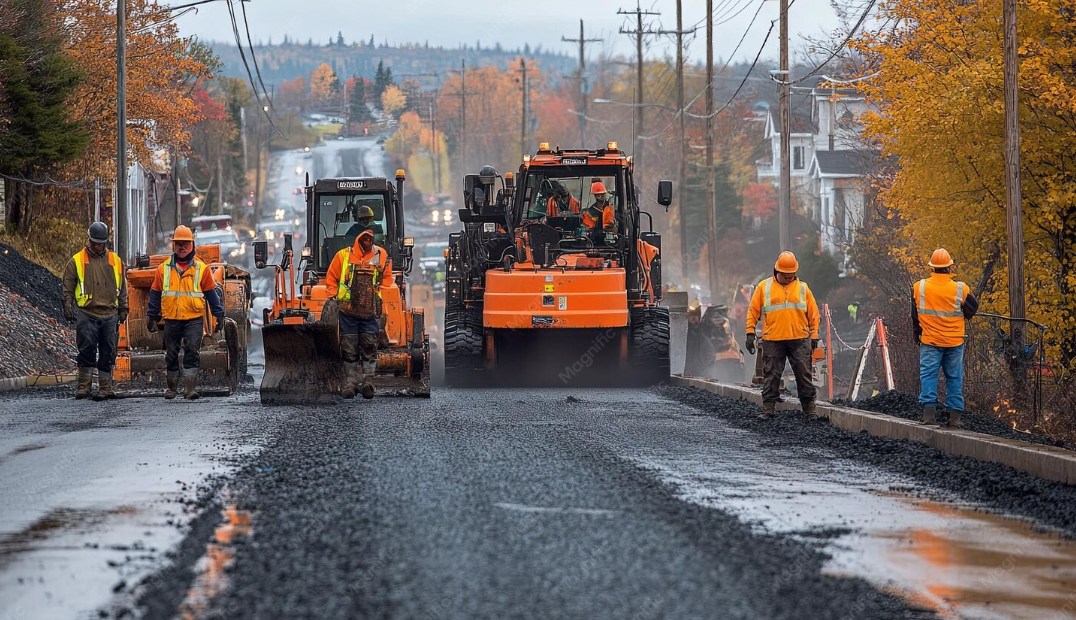
Base, binder and surface courses are laid with a paving machine and rolled to the right density while the material is still hot. Weather matters here: rain and very cold conditions can prevent proper compaction.
Road markings, signs and any ironwork are finalised. The works are inspected, defects are corrected and the area is handed over or adopted, depending on the type of road.
The approvals you need depend on whether the road is private or part of the public highway.
Lead times vary by authority and by how busy the road is, so applications should be made as early as possible. Your contractor and highway engineer should confirm which permits apply to your project.
Good contractors source materials from approved suppliers and test them to confirm they meet the specification.
The most common causes of delay are late permit applications, unrecorded utilities, poor ground conditions discovered during excavation, and bad weather during surfacing. You can reduce risk by completing surveys early, allowing time for approvals, and agreeing in writing how unforeseen ground issues will be priced.
Good road construction depends on the work you cannot see: the ground preparation, drainage, sub-base and correct permits. A contractor who plans these carefully will deliver a road that lasts and causes less disruption to neighbours and traffic.
WJB Groundworks Ltd provides roadworks, drainage, groundworks and civil engineering services across Greater London and has been doing so since 2014. If you are planning a road, car park or access route, you can contact the team to discuss your project and request a quote.
Roadworks contractors build, repair and resurface roads, car parks and access routes. Their work includes excavation, ground preparation, drainage, kerbing, asphalt laying, markings and reinstatement after utility works.
If the works are on or affect the public highway, you will usually need a permit through the London Permit Scheme and may also need temporary traffic orders. Works on purely private land generally do not need highway permits, but may still need planning or building control approval.
A small repair or access road may take a few days to a few weeks. Larger estate roads or junction works can take several months. Ground conditions, permit approvals, utilities, traffic management and weather all affect the programme.
A Section 278 agreement allows a developer to carry out works to an existing public highway, such as a new junction. A Section 38 agreement covers the adoption of a new road by the highway authority once it has been built to the required standard.
Roads are built from layers, usually a compacted granular sub-base, asphalt base and binder courses, and an asphalt surface course, supported by concrete kerbs, geotextiles where needed and drainage products. The exact specification depends on traffic loads and ground conditions.
Consult with our specialists and book an on-site inspection at your convenience. Contact us at 01784740573, or email us at info@wjbgroundworks.com for a bespoke quote. Visit our portfolio and explore the projects we have conducted successfully.